

Behavior Change Communications for Ending Violence BC: Making Bystander Action More Achievable on Campus
The Challenge
Campus sexual violence prevention cannot depend on posters alone. Students may hear a sexualized or degrading comment, see pressure continue after someone says no, notice repeated unwanted attention or see an intimate image shared without consent – yet still hesitate. They may be unsure whether something is serious enough, fear making the situation worse or simply not know what to say or do.
EVA BC needed to adapt an established gender-based violence prevention program for today’s post-secondary audiences without losing its credibility, trauma-informed foundation or survivor-centred approach. The campaign also had to work across 25 public post-secondary institutions, each with different campus environments, capacities, and communications resources. It needed to be socially believable to students and practical for campus staff to implement.
Our Strategy
Diagnose the barrier between caring and acting. Yulu grounded the campaign in behavior-change research and the COM-B model, examining the capability, opportunity and motivation that influence whether someone intervenes. The strategic insight was that many students do not need to be convinced that harm matters. They need socially realistic, practical options that make taking the next step feel possible.
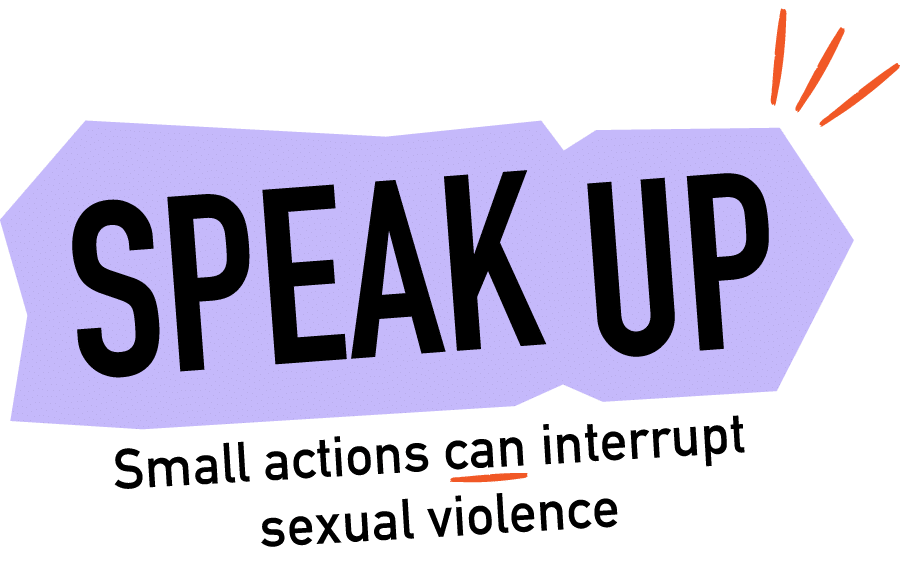
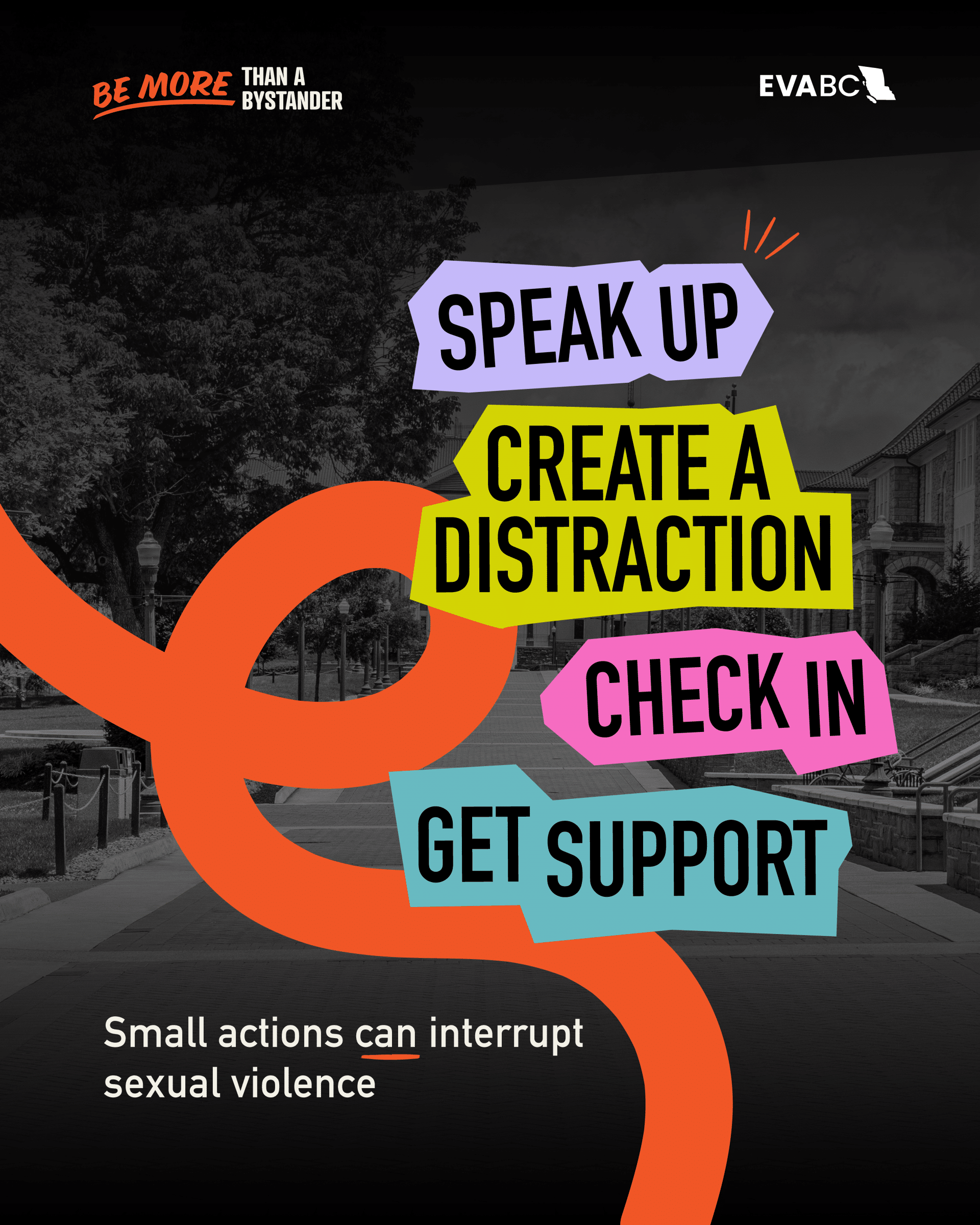
Replace the idealized hero with achievable actions. Rather than equating intervention with confrontation, we built a creative campaign around four flexible pathways: Speak Up, Create a Distraction, Check In and Get Support. Each offers another way to respond, with safety, consent and survivor autonomy guiding the choice.
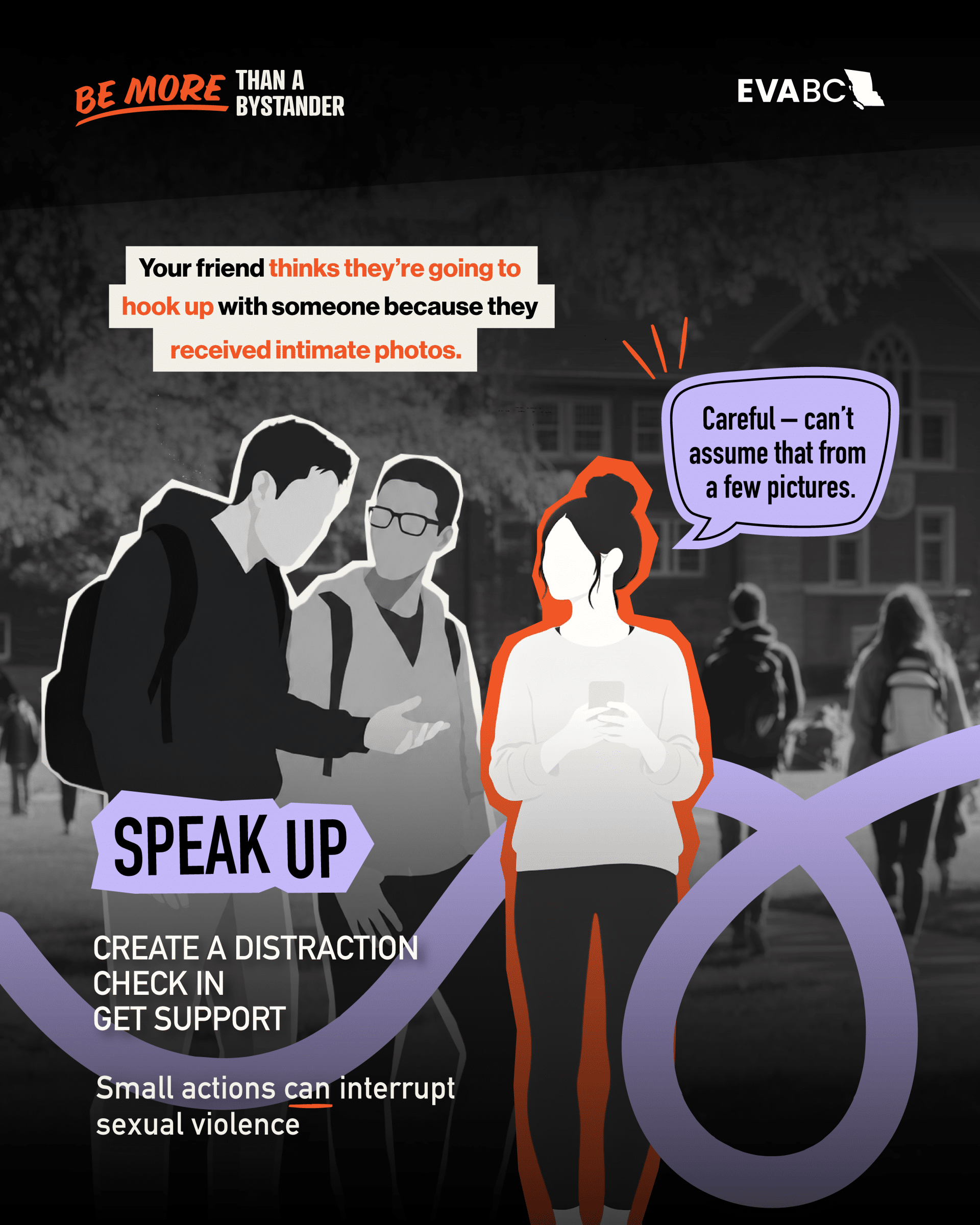
Make it sound and look like actual student life. Creative scenarios addressed everyday settings such as group chats, residence life, recreation spaces and classroom or peer interactions. Yulu developed dialogue and creative recommendations to avoid institutional-sounding scripts, making interventions more recognizable without sensationalizing experiences of harm.
Design for adoption, not just launch. Because individual institutions would implement the campaign, a provincial creative concept alone was not enough. The work required reusable materials, adaptable formats and an accessible implementation toolkit that could help campuses bring a consistent, evidence-informed prevention message into their own communities.
How We Brought It to Life
1. Translate behavior science into clear action pathways
Yulu developed a campaign blueprint connecting behavior-change research, audience barriers and defined behavior-change objectives with practical interventions. The four pathways, Speak Up, Create a Distraction, Check In, and Get Support, translated an abstract call to intervene into small practical actions students could choose depending on the situation and what felt safe.
2. Create student-centred stories people can recognize
The creative system used realistic, everyday campus scenarios to show how sexual violence and harmful behavior can appear through boundary testing, pressure, sexualized comments, unwanted attention, and non-consensual image sharing. Yulu’s messaging, copywriting, dialogue guidance and creative development emphasized actionable responses rather than shame, fear or unrealistic heroism.
3. Build a flexible creative and campaign toolkit
Yulu developed a flexible suite of digital, social, video and print campaign materials designed for practical institutional use, supported by a comprehensive implementation toolkit. The toolkit included guidance on campaign rollout, brand and creative use, accessibility, institutional customization, student engagement, safety and response, and measurement.
4. Make province-wide rollout manageable
Yulu developed a modular implementation system for post-secondary institutions with different campus environments, communications capacities and resources. Rollout guidance covered adaptable asset use, campus-specific support information, campaign timing and measurement so institutions could maintain a consistent provincial campaign while tailoring implementation to local needs.
5. Support a public conversation about shared responsibility
EVA BC launched the post-secondary Be More Than a Bystander campaign in September 2026. Launch communications framed the initiative around the practical reality that students may want to intervene but do not always know how. The message was deliberately empowering: there is no single “right” response, and meaningful bystander action can begin with speaking up, creating a distraction, checking in or getting support.
Services Provided
- Behavior change communications strategy and COM-B-informed research
- Behavior change research and audience insight
- Campaign positioning and creative concept development
- Trauma-informed and survivor-centred messaging
- Student-centred copywriting and scenario development
- Campaign identity, creative direction and asset development
- Video, digital, print and social campaign content
- Campus toolkit, implementation and activation guidance
- Landing-page content and user-experience planning
- Launch messaging, evaluation planning and stakeholder collaboration
Campaign Delivery and Early Impact
- Provincial Campaign Launch: EVA BC launched its post-secondary Be More Than a Bystander campaign on September 9, 2026.
- Designed for Province-Wide Implementation: Yulu developed a flexible prevention campaign designed for use across 25 public post-secondary institutions in British Columbia.
- Four Practical Action Pathways: Check In, Speak Up, Create a Distraction and Get Support translated bystander prevention into clear, context-sensitive options.
- Campaign Toolkit & Creative System: Yulu developed a research-informed campaign blueprint, adaptable creative materials and implementation resources to help institutions bring prevention messaging into campus life.
Together, the work gave EVA BC a scalable, practical and trauma-informed communications platform designed to make safer bystander intervention easier to understand and act on across post-secondary settings.
FAQ
What is behavior change communications?
Behavior change communications uses evidence about the barriers, motivations and circumstances shaping people’s actions to design messages, experiences and tools that make desired behaviors more achievable. It goes beyond awareness by helping audiences understand not just why an issue matters, but what they can realistically do next.
What does trauma-informed campaign strategy involve?
Trauma-informed communications prioritize emotional and physical safety, autonomy and choice, while recognizing that audiences may include people directly affected by the issue being addressed. For EVA BC, the campaign avoided presenting confrontation as the only appropriate response.
Can Yulu design behavior change campaigns for multiple institutions?
Yes. For EVA BC, Yulu developed a modular campaign and implementation system designed for use across 25 public post-secondary institutions, allowing organizations with different audiences, capacities and local resources to use a consistent core campaign while adapting implementation to their context.
Looking for a Behavior Change Communications Partner?
Whether you need to shift public attitudes, make preventive action easier or translate evidence into communications that diverse audiences can use, Yulu combines research, strategy and creative execution to build practical, audience-centred behavior change campaigns.
Explore our Behavior Change PR & communications expertise →
Email hello@yulupr.com or call +1 604-558-1656 to discuss your project.
Related Case Studies

Canadian Mental Health Association | PACT

BC Schizophrenia Society


Case Study
#StandAgainstStigma Awareness Campaign